
👆👆👆
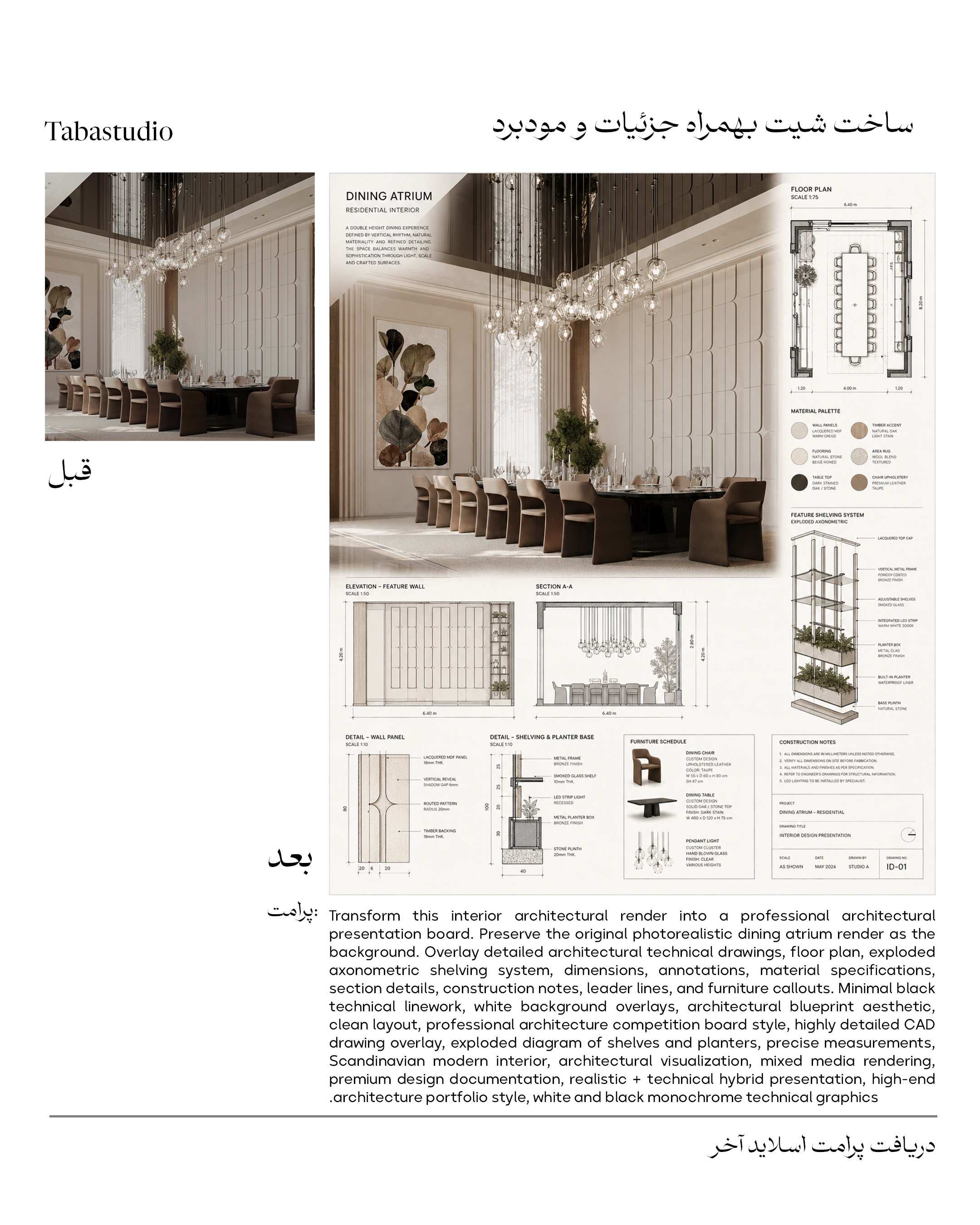
Transform this interior architectural render into a professional architectural presentation board. Preserve the original photorealistic dining atrium render as the background. Overlay detailed architectural technical drawings, floor plan, exploded axonometric shelving system, dimensions, annotations, material specifications, section details, construction notes, leader lines, and furniture callouts. Minimal black technical linework, white background overlays, architectural blueprint aesthetic, clean layout, professional architecture competition board style, highly detailed CAD drawing overlay, exploded diagram of shelves and planters, precise measurements, Scandinavian modern interior, architectural visualization, mixed media rendering, premium design documentation, realistic + technical hybrid presentation, high-end architecture portfolio style, white and black monochrome technical graphics.
👆👆👆
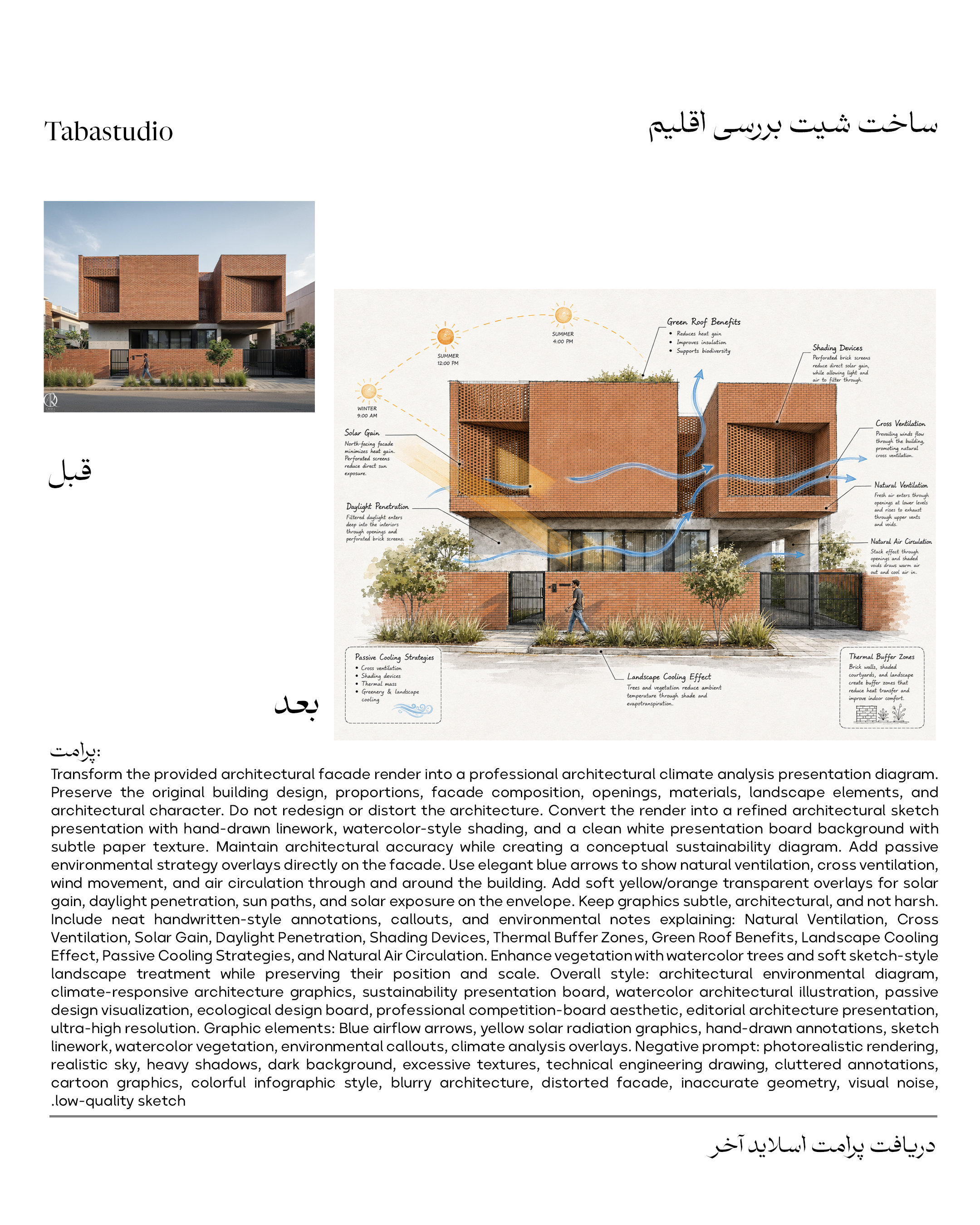
Transform the provided architectural facade render into a professional architectural climate analysis presentation diagram.
Preserve the original building design, proportions, facade composition, openings, materials, landscape elements, and architectural character. Do not redesign or distort the architecture.
Convert the render into a refined architectural sketch presentation with hand-drawn linework, watercolor-style shading, and a clean white presentation board background with subtle paper texture. Maintain architectural accuracy while creating a conceptual sustainability diagram.
Add passive environmental strategy overlays directly on the facade. Use elegant blue arrows to show natural ventilation, cross ventilation, wind movement, and air circulation through and around the building.
Add soft yellow/orange transparent overlays for solar gain, daylight penetration, sun paths, and solar exposure on the envelope. Keep graphics subtle, architectural, and not harsh.
Include neat handwritten-style annotations, callouts, and environmental notes explaining:
Natural Ventilation
Cross Ventilation
Solar Gain
Daylight Penetration
Shading Devices
Thermal Buffer Zones
Green Roof Benefits
Landscape Cooling Effect
Passive Cooling Strategies
Natural Air Circulation
Enhance vegetation with watercolor trees and soft sketch-style landscape treatment while preserving their position and scale.
Overall style: architectural environmental diagram, climate-responsive architecture graphics, sustainability presentation board, watercolor architectural illustration, passive design visualization, ecological design board, professional competition-board aesthetic, editorial architecture presentation, ultra-high resolution.
Graphic elements:
Blue airflow arrows, yellow solar radiation graphics, hand-drawn annotations, sketch linework, watercolor vegetation, environmental callouts, climate analysis overlays.
Negative prompt:
photorealistic rendering, realistic sky, heavy shadows, dark background, excessive textures, technical engineering drawing, cluttered annotations, cartoon graphics, colorful infographic style, blurry architecture, distorted facade, inaccurate geometry, visual noise, low-quality sketch.
👆👆👆
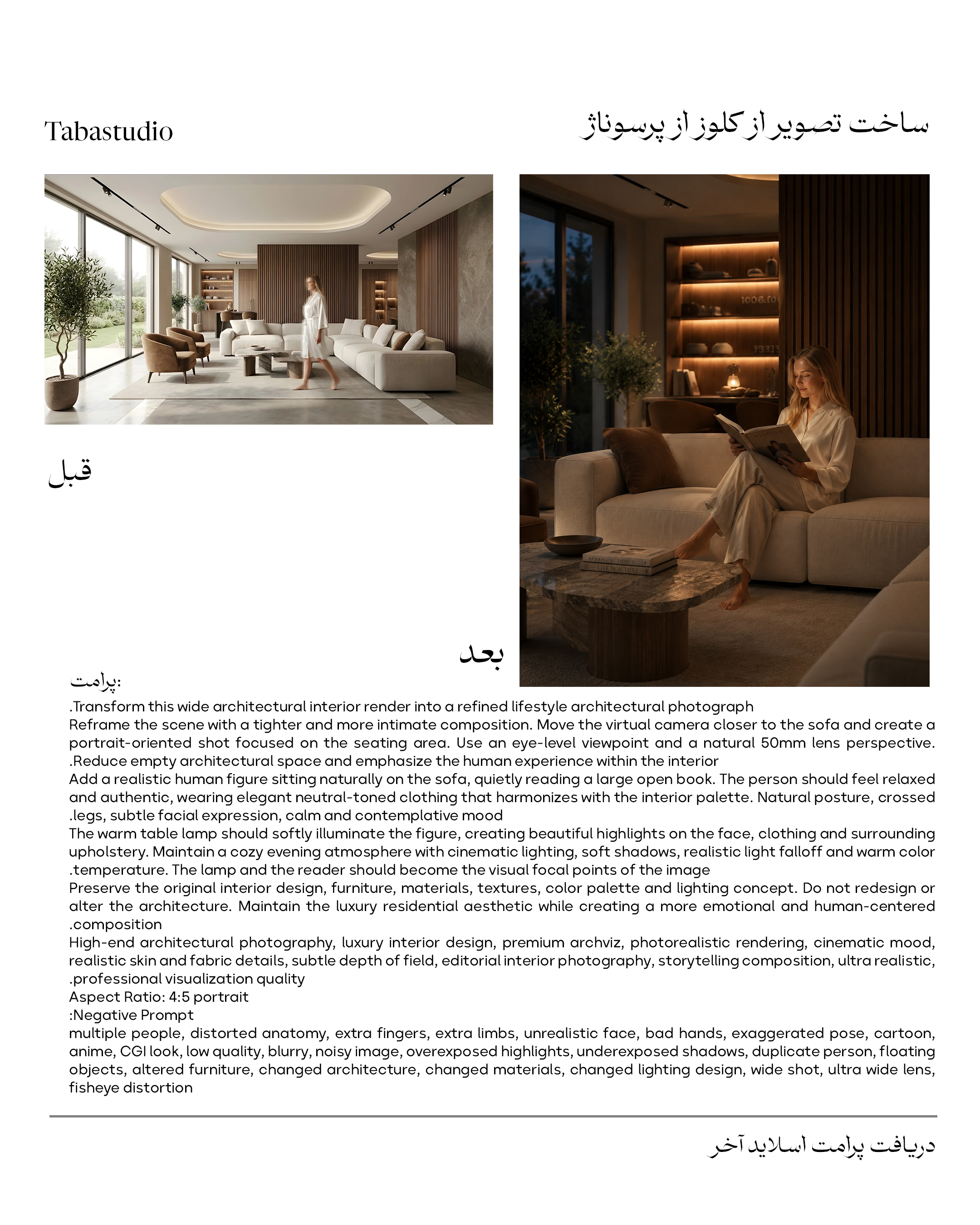
Transform this wide architectural interior render into a refined lifestyle architectural photograph.
Reframe the scene with a tighter and more intimate composition. Move the virtual camera closer to the sofa and create a portrait-oriented shot focused on the seating area. Use an eye-level viewpoint and a natural 50mm lens perspective. Reduce empty architectural space and emphasize the human experience within the interior.
Add a realistic human figure sitting naturally on the sofa, quietly reading a large open book. The person should feel relaxed and authentic, wearing elegant neutral-toned clothing that harmonizes with the interior palette. Natural posture, crossed legs, subtle facial expression, calm and contemplative mood.
The warm table lamp should softly illuminate the figure, creating beautiful highlights on the face, clothing and surrounding upholstery. Maintain a cozy evening atmosphere with cinematic lighting, soft shadows, realistic light falloff and warm color temperature. The lamp and the reader should become the visual focal points of the image.
Preserve the original interior design, furniture, materials, textures, color palette and lighting concept. Do not redesign or alter the architecture. Maintain the luxury residential aesthetic while creating a more emotional and human-centered composition.
High-end architectural photography, luxury interior design, premium archviz, photorealistic rendering, cinematic mood, realistic skin and fabric details, subtle depth of field, editorial interior photography, storytelling composition, ultra realistic, professional visualization quality.
Aspect Ratio: 4:5 portrait
Negative Prompt:
multiple people, distorted anatomy, extra fingers, extra limbs, unrealistic face, bad hands, exaggerated pose, cartoon, anime, CGI look, low quality, blurry, noisy image, overexposed highlights, underexposed shadows, duplicate person, floating objects, altered furniture, changed architecture, changed materials, changed lighting design, wide shot, ultra wide lens, fisheye distortion
👆👆👆
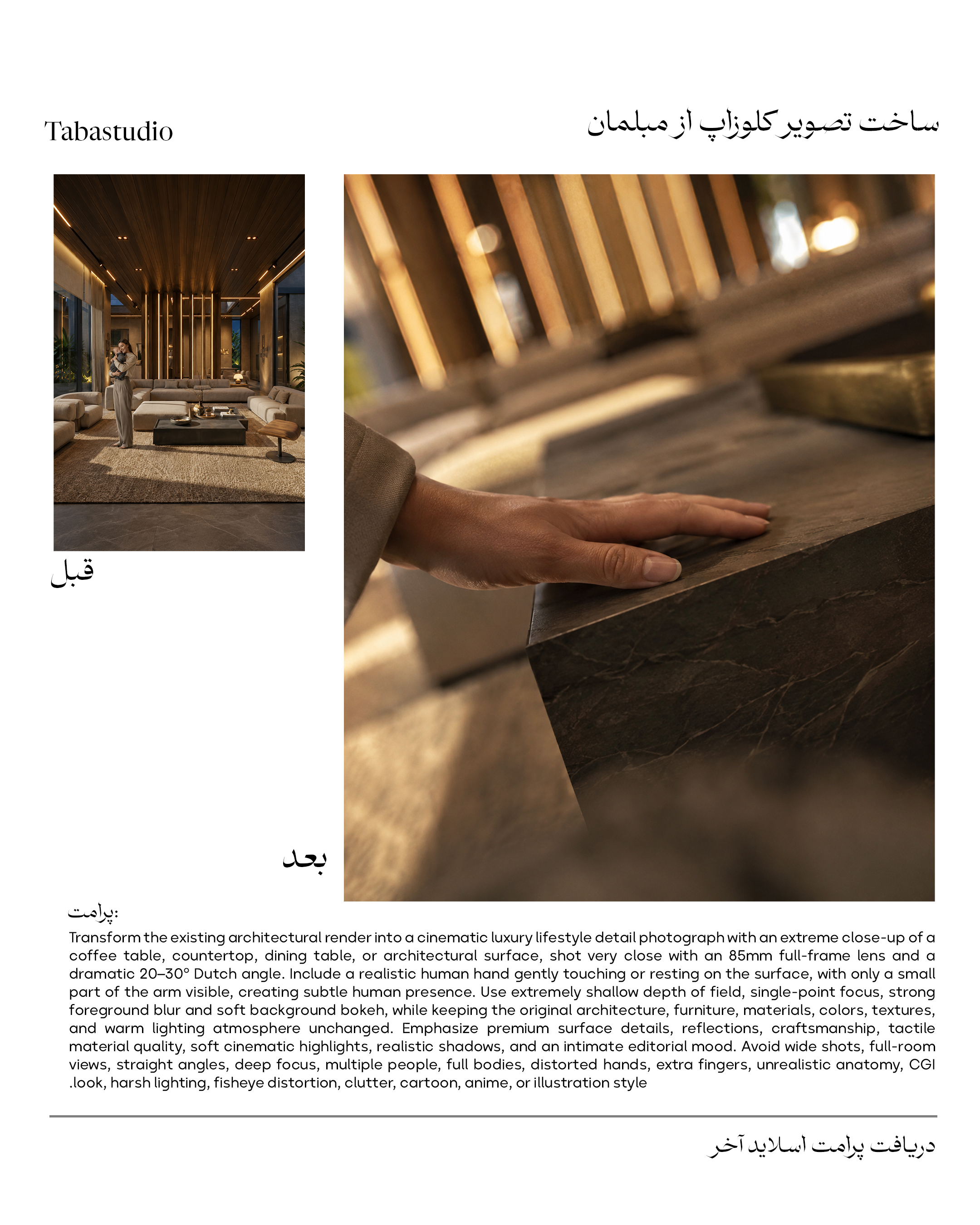
Transform the existing architectural render into a cinematic lifestyle detail photograph.
Create an extreme close-up shot focused on the edge of a coffee table, dining table, countertop, or architectural surface within the space. Position the camera very close to the furniture and compose the image with a dramatic Dutch angle (tilted camera approximately 20–30 degrees) to create a dynamic and artistic perspective.
Include a realistic human hand naturally resting on, touching, or interacting with the surface. The hand should feel authentic and effortless, suggesting human presence rather than becoming the main subject. Only a small portion of the arm or body should be visible.
Use a professional full-frame camera aesthetic with an 85mm lens. Create an extremely shallow depth of field with strong foreground blur and background bokeh. Only a very small area should remain perfectly sharp while the rest of the image gradually falls out of focus. Simulate realistic lens behavior, focus falloff, and cinematic optical blur.
Maintain the original interior design, architecture, furniture, materials, textures, and lighting concept. Do not redesign or alter the space. The architecture should remain visible in the background but heavily blurred, acting as atmospheric context rather than the primary subject.
Emphasize premium material textures, reflections, surface details, craftsmanship, and tactile quality. Capture the feeling of luxury living and human interaction with the space.
Warm cinematic lighting, soft highlights, realistic shadows, subtle reflections, luxury residential atmosphere, intimate storytelling, architectural lifestyle photography, editorial interior design photography, Architectural Digest style, emotional visual narrative, photorealistic rendering, ultra-realistic details, premium archviz quality.
Camera Position: Extremely close to the furniture surface
Lens: 85mm
Camera Angle: Dutch Angle (20–30° tilt)
Focus: Single-point focus
Depth of Field: Extremely shallow
Composition: Detail-oriented lifestyle shot
Style: Luxury architectural editorial photography
Mood: Warm, intimate, cinematic, sophisticated
Negative Prompt:
wide shot, full room view, straight camera angle, centered composition, deep depth of field, everything in focus, architectural overview shot, floor plan view, multiple people, full human body, unrealistic hands, extra fingers, distorted anatomy, artificial pose, CGI appearance, low quality, blurry focal subject, harsh lighting, overexposed highlights, underexposed shadows, fisheye lens, distorted perspective, cluttered composition, cartoon, anime, illustration
👆👆👆
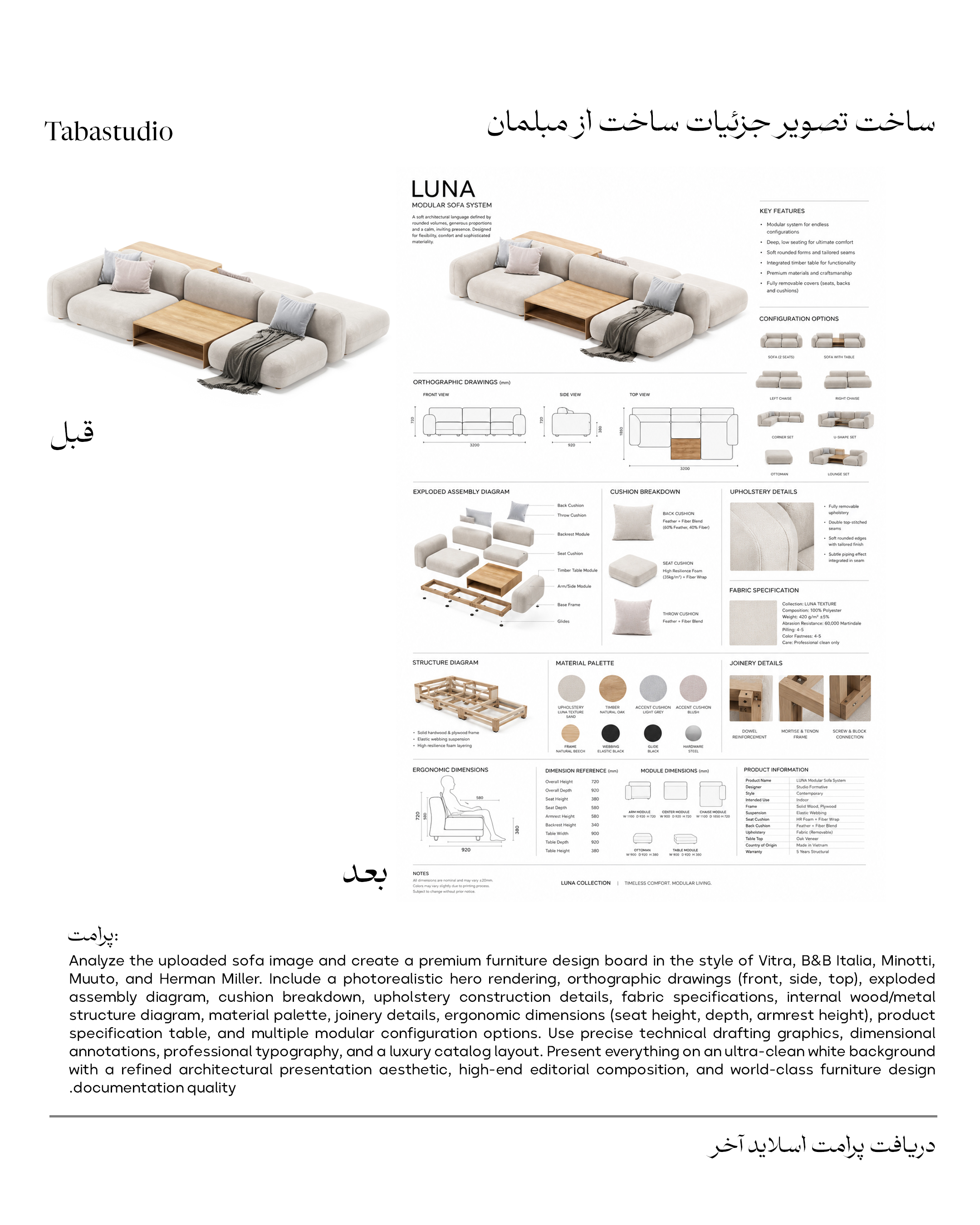
Analyze the uploaded sofa image and generate a professional furniture design board.
Create:
- Hero rendering
- Orthographic drawings (front, side, top)
- Exploded assembly diagram
- Cushion breakdown
- Upholstery details
- Fabric specification
- Wood/metal structure diagram
- Material palette
- Joinery details
- Ergonomic dimensions
- Seating height, depth, armrest height
- Product information table
- Multiple configuration options
Use a premium furniture catalog layout similar to Vitra, B&B Italia, Minotti, Muuto, or Herman Miller design presentations.
Ultra-clean white background.
Architectural presentation style.
Technical drafting graphics.
Professional typography.
High-end furniture design board.
👆👆👆
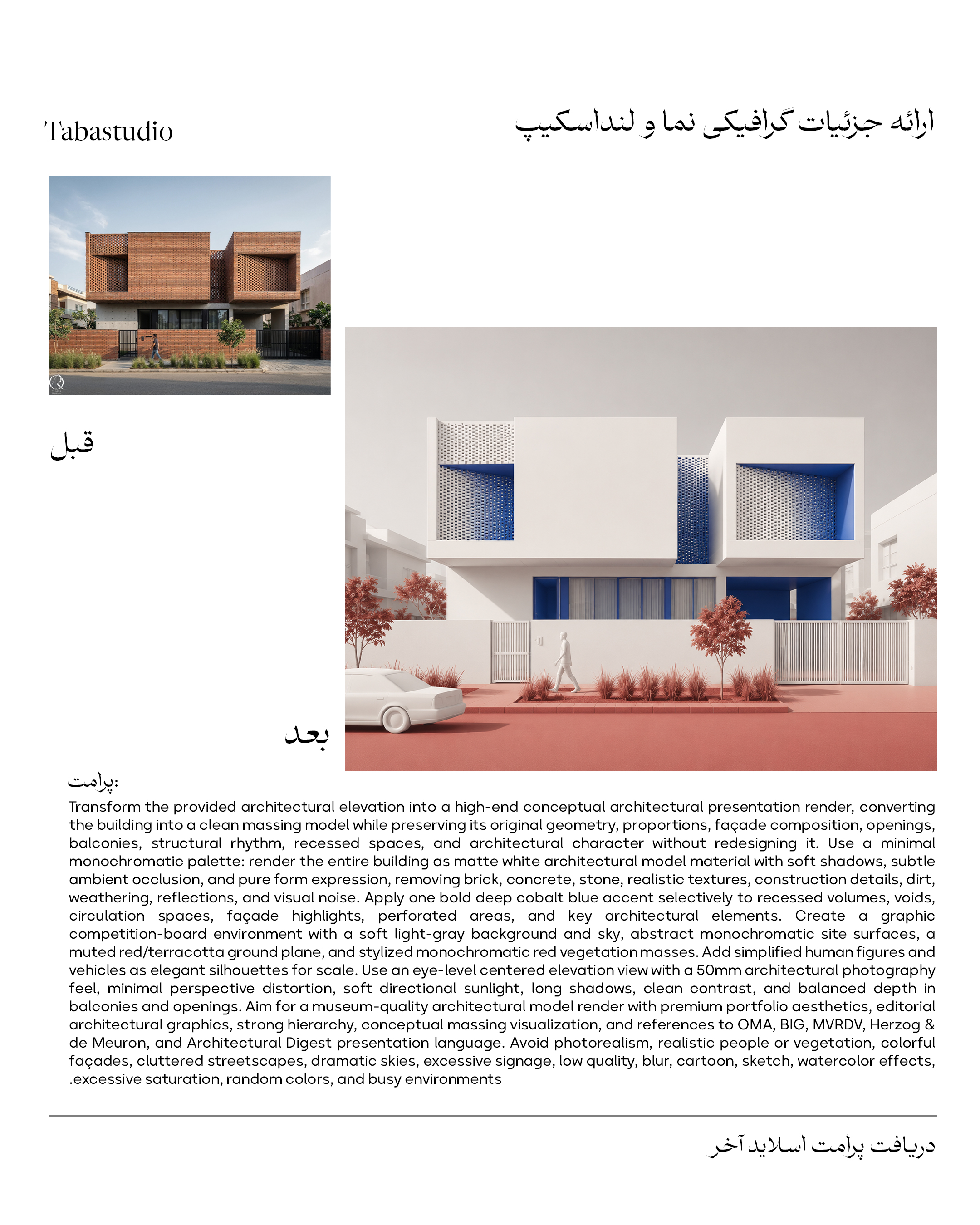
Transform the provided architectural building elevation into a high-end conceptual architectural presentation render.
Convert the building into a clean architectural massing model while preserving the original geometry, proportions, façade composition, openings, balconies, structural rhythm and architectural character. Do not redesign the project.
Use a minimal monochromatic material palette. Render the entire building in matte white architectural model material with soft shadows and subtle ambient occlusion. Eliminate realistic construction materials and focus on pure architectural form.
Introduce a single bold accent color applied selectively to recessed volumes, voids, circulation spaces, architectural highlights and key design elements. Use a deep saturated cobalt blue accent integrated into the façade composition.
Create a graphic architectural presentation environment. Replace realistic site materials with abstract monochromatic surfaces. Use a muted light-gray background and sky. Render the ground plane as a clean graphic surface with a single complementary accent color such as muted red or terracotta. Trees should appear as stylized monochromatic masses matching the graphic language of the presentation.
Include simplified human figures and vehicles as minimal architectural scale references. They should appear as elegant silhouettes rather than realistic people.
Use soft directional sunlight creating long architectural shadows and emphasizing depth within balconies, openings and recessed spaces. Maintain a refined balance between light and shadow.
Architectural competition board aesthetic, conceptual massing visualization, white architectural model render, editorial architecture presentation, museum-quality architectural graphics, premium architectural portfolio style, minimal composition, strong graphic hierarchy, architectural storytelling, design-focused visualization.
Style references:
Architectural model photography
Competition presentation board
Conceptual massing render
OMA presentation graphics
BIG competition diagrams
MVRDV conceptual visualization
Herzog & de Meuron presentation language
Architectural Digest editorial graphics
Color Palette:
Primary building color: Matte white
Accent architectural color: Deep cobalt blue
Ground plane: Muted red / terracotta
Background: Soft light gray
Vegetation: Monochromatic graphic red masses
Camera:
Eye-level architectural elevation view
50mm architectural photography lens
Centered composition
Minimal perspective distortion
Lighting:
Soft directional sunlight
Long shadows
Subtle ambient occlusion
Clean architectural contrast
Quality:
Ultra-high resolution
Museum-quality presentation
Premium architectural visualization
Negative Prompt:
realistic materials, brick texture, stone texture, realistic concrete texture, excessive reflections, photorealistic rendering, colorful façade, cluttered environment, realistic vegetation, realistic people, complex sky, dramatic clouds, excessive signage, busy streetscape, construction details, dirty surfaces, weathering, low quality, blurry image, cartoon style, sketch effect, watercolor style, excessive saturation, random colors, visual noise
👆👆👆
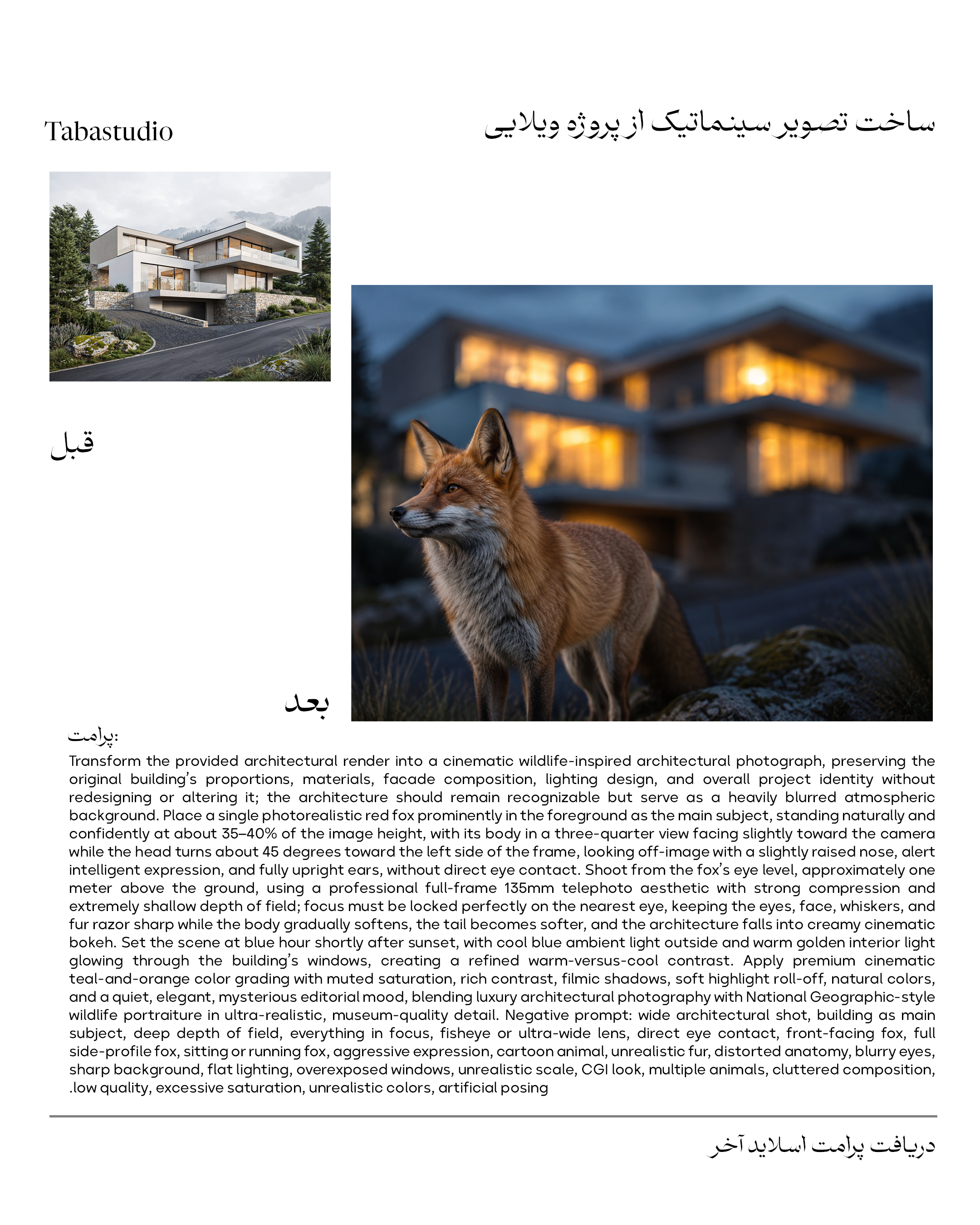
Transform the provided architectural render into a cinematic wildlife-inspired architectural photograph.
Preserve the original architecture, building proportions, materials, facade composition, lighting design and overall project identity. Do not redesign or alter the building. The architecture should remain recognizable but function primarily as a softly blurred atmospheric background.
Place a photorealistic fox prominently in the foreground as the primary visual subject. The fox should stand naturally and confidently in front of the building, occupying approximately 35–40% of the image height.
The fox must be posed exactly like a professional wildlife portrait. Its body should be shown in a three-quarter view, facing slightly toward the camera. The head should be turned approximately 45 degrees toward the left side of the frame, looking at a point outside the image. The nose should be slightly elevated, creating a curious, alert and intelligent expression. Both ears must be fully upright and attentive. The fox should not look toward the camera. The body remains still while only the head and gaze are rotated.
Position the camera at the fox’s eye level, approximately one meter above the ground. Use a professional full-frame telephoto photography aesthetic with a 135mm lens. The camera should be relatively close to the fox while maintaining strong background compression.
Focus must lock precisely on the eye closest to the camera. The eyes, facial features and fur texture should be razor sharp. The focus should gradually fall off across the body, with the tail becoming softer and the architecture heavily blurred in the background.
Create an extremely shallow depth of field with realistic optical compression and creamy cinematic bokeh. The building should remain visible but heavily out of focus, acting as a warm atmospheric backdrop.
Capture the scene during blue hour, shortly after sunset. The surrounding environment should be illuminated by cool blue ambient evening light. Interior spaces of the building should emit warm golden light through windows and openings, creating a strong warm-versus-cool contrast.
Apply premium cinematic color grading. Use subtle teal-and-orange tones, rich contrast, slightly muted saturation, filmic shadows, soft highlight roll-off and professional editorial photography aesthetics. Preserve natural colors while creating an emotional cinematic atmosphere.
Create a quiet, elegant and slightly mysterious mood. The image should feel like a fusion of luxury architectural photography and National Geographic wildlife portraiture.
Luxury architectural photography, wildlife portrait photography, cinematic storytelling, Architectural Digest atmosphere, National Geographic quality, premium editorial imagery, ultra-realistic fur details, realistic lens behavior, museum-quality photography, emotional visual narrative, professional DSLR aesthetics.
Camera Position:
Fox eye-level perspective
Approximately 1 meter above ground
Lens:
135mm telephoto lens
Focus:
Nearest eye in perfect focus
Depth of Field:
Extremely shallow
Composition:
Foreground subject dominant
Building secondary and blurred
Lighting:
Blue hour ambient light
Warm interior architectural lighting
Soft cinematic contrast
Color Grading:
Teal and orange cinematic grading
Muted saturation
Filmic shadows
Premium editorial photography look
Mood:
Atmospheric
Quiet
Elegant
Sophisticated
Story-driven
Quality:
Ultra-high resolution
Professional photography quality
Museum-quality image
Negative Prompt:
wide architectural shot, building as main subject, deep depth of field, everything in focus, fisheye lens, ultra-wide lens, direct eye contact, front-facing fox, side-profile fox, sitting fox, running fox, aggressive expression, cartoon animal, unrealistic fur, distorted anatomy, blurry eyes, sharp background, flat lighting, overexposed windows, unrealistic scale, CGI appearance, multiple animals, cluttered composition, low quality, excessive saturation, unrealistic colors, artificial posing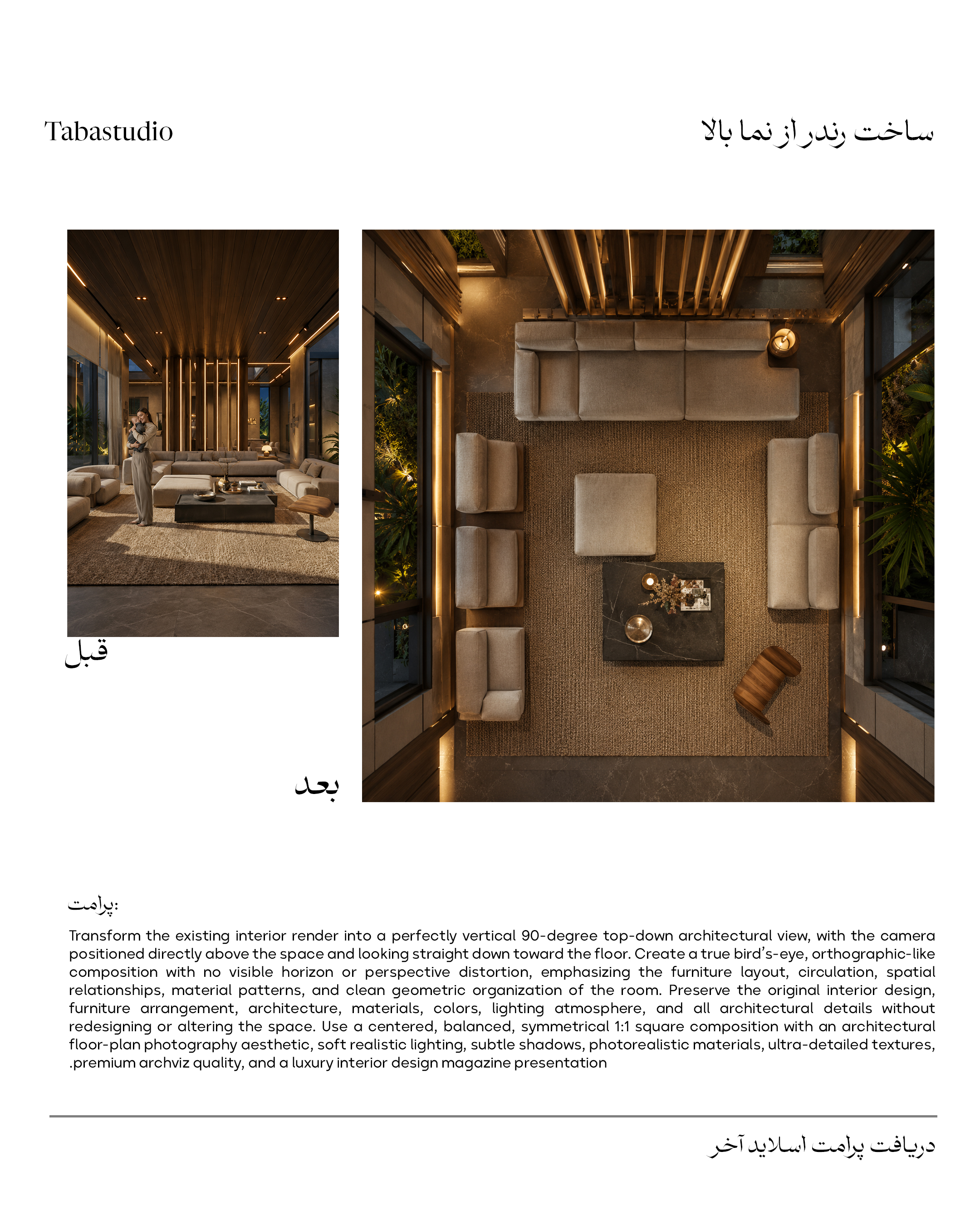
👆👆👆
Transform the existing interior render into a perfectly vertical top-down architectural view.
Position the camera directly above the space at a 90-degree angle, looking straight down toward the floor. Create a true bird's-eye view composition with no visible horizon or perspective distortion. The entire room should be organized as a clean geometric composition, emphasizing furniture layout, circulation, spatial relationships and material patterns.
Maintain the original interior design, furniture arrangement, materials, colors and lighting atmosphere. Do not redesign the space. Preserve all architectural details while presenting them from an overhead perspective.
Architectural floor-plan photography aesthetic, perfectly centered composition, balanced furniture arrangement, luxury interior design visualization, symmetrical layout, geometric storytelling, editorial architecture presentation.
Soft realistic lighting, subtle shadows, photorealistic materials, premium archviz quality, ultra-detailed textures, clean composition, interior design magazine style.
Camera angle: 90-degree overhead view
Camera type: Orthographic-like architectural view
Composition: Centered and balanced
Aspect ratio: 1:1 square
High-end architectural visualization